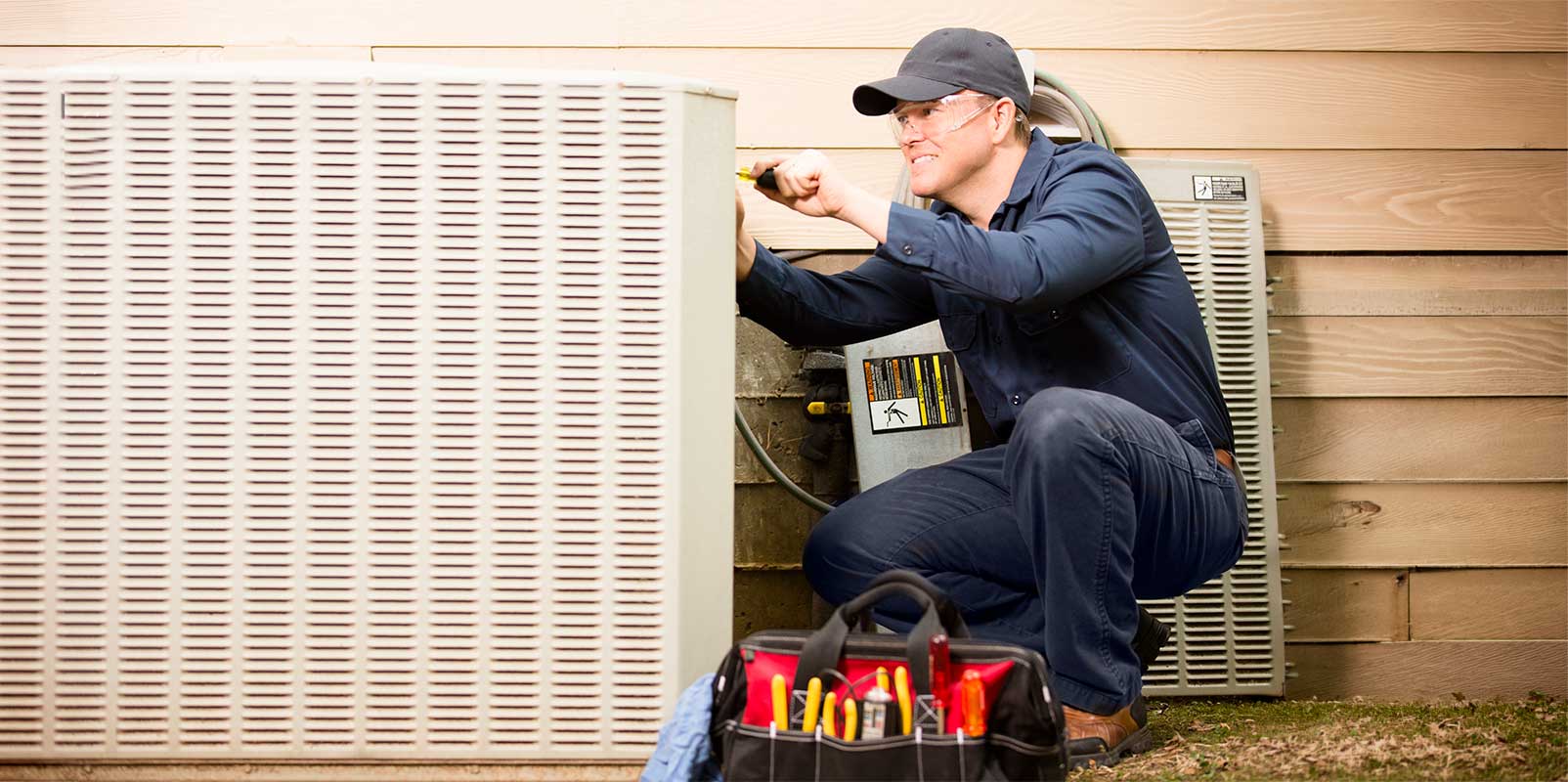
Why Is My AC Turning On and Off Rapidly? The Danger of “Short-Cycling”
It’s one of the most frustrating sounds a Tampa Bay homeowner can hear during a brutal summer stretch. Your air conditioner kicks on with a loud hum, runs for a brief three to five minutes, abruptly shuts down, and then repeats the exact same sequence ten minutes later.
If your AC is turning on and off rapidly, your system is experiencing a common but serious mechanical anomaly known in the HVAC industry as AC short-cycling.
An air conditioner is engineered to run in steady, predictable cooling cycles. In a perfectly balanced home, a system should run for roughly 15 to 20 minutes to reach its target temperature before taking a restful break. When those cycles are truncated into rapid, frantic bursts, it’s a clear warning sign that something is actively harming your system’s performance.
Understanding why your air conditioner is short-cycling can help you avoid high energy bills, prevent premature equipment failure, and keep your home from suffering from stifling indoor humidity.
Did You Know?
Constant starting and stopping does far more damage to your home’s energy efficiency than leaving the air conditioner running smoothly.
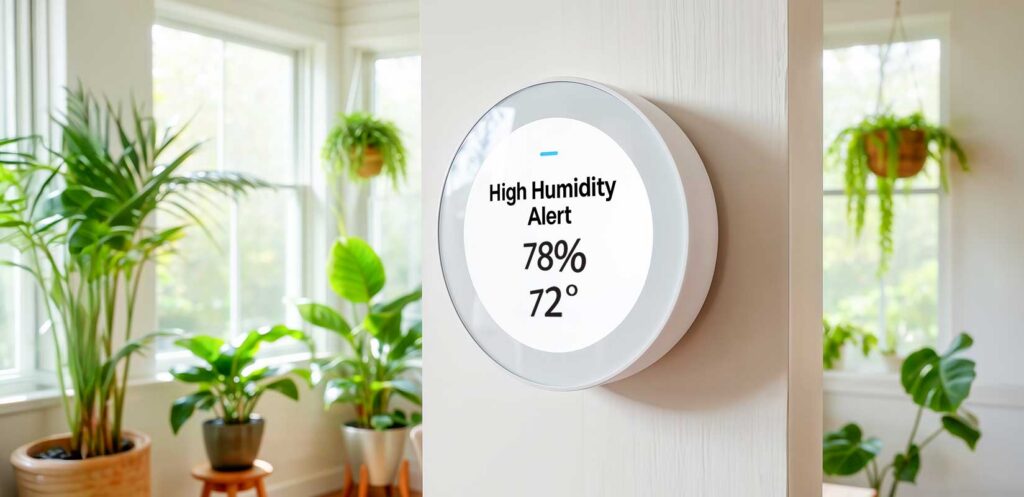
The Invisible Threat: The Florida Humidity Trap
When an AC is short-cycling, most homeowners focus solely on the ambient temperature. However, in Florida, an air conditioner has two equally critical jobs: lowering the temperature and removing moisture from the indoor air.
An air conditioning system removes humidity by blowing warm, damp indoor air across a freezing-cold evaporator coil. As the air passes over, the moisture condenses into liquid water on the coil and drains away. This chemical process takes time. It typically takes a system 10 to 12 minutes of continuous operation for the coils to cool enough to start actively pulling water out of the air.
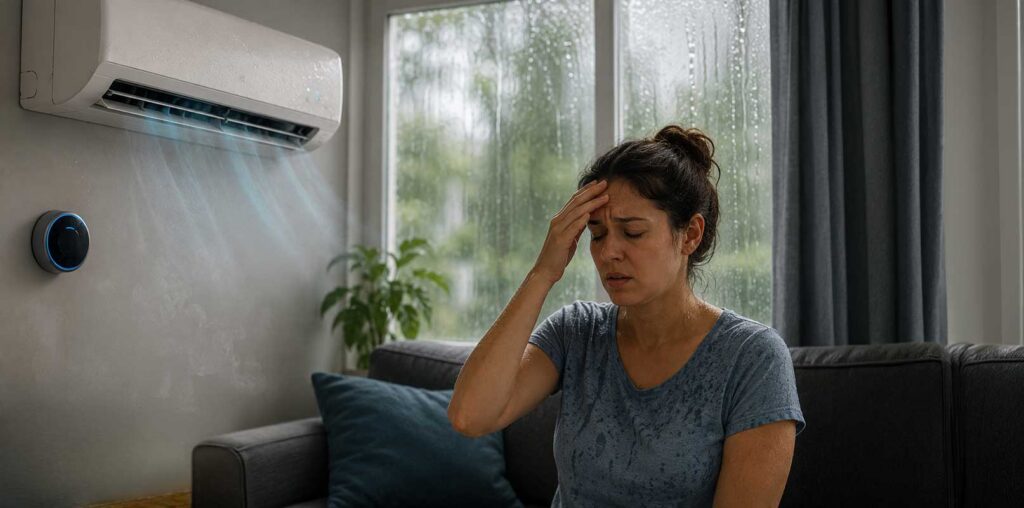
If your system runs for only a few minutes before shutting off, it never gets the chance to dehumidify your home. The result? Your thermostat might say it’s 74 degrees, but your house will feel damp, sticky, and heavy, creating an ideal breeding ground for biological growth and mold.
4 Reasons Your AC Is Turning On and Off Rapidly
An AC short-cycling can be triggered by simple airflow blockages, electrical component degradation, or flaws in the foundational system design. Here are the four most common culprits behind the issue:
1. An Oversized AC Unit (The “Too Big” Problem)
When it comes to climate control, bigger is definitely not better. If a previous contractor did not perform accurate load calculations and installed an oversized system for your square footage, the unit will blast your home with cold air too quickly.
- The Chain Reaction: The massive rush of cold air satisfies the thermostat almost instantly, forcing the system to shut down after a few minutes. Because it shut down prematurely, the humidity remains trapped inside, causing the indoor air to feel sticky and warm again just minutes later, prompting the thermostat to turn the system right back on.
3. Frozen or Leaking Refrigerant
Refrigerant is the lifeblood of your cooling system. If your AC has a physical leak in its copper lines, the lack of chemical pressure alters how the system operates.
- The Chain Reaction: Modern air conditioners feature built-in low-pressure safety controls. When the refrigerant drops below a certain threshold, the low-pressure switch shuts off the compressor to protect it from overheating. Once the pressures equalize slightly during the rest period, the switch resets, turning the system back on, only to trip again seconds later.
4. Poor Thermostat Placement
Your thermostat is the brain of your HVAC system, but it can easily be tricked if it is installed in the wrong spot.
- The Chain Reaction: If your thermostat is mounted directly beneath a supply vent, next to a drafty exterior door, or in the direct path of hot sunlight from a window, it will read false local temperatures. It will register a sudden drop or spike in temperature that doesn’t reflect the rest of the house, triggering rapid, erratic cycles.
The Financial Impact: Why You Can’t Afford to Wait
Ignoring an AC turning on and off rapidly is an expensive gamble. The single most taxing part of an air conditioner’s operation is the startup phase. Starting up the heavy electrical motors draws a massive amperage surge compared to when the system is running smoothly.
When a system short cycles dozens of times a day, two things happen:
- Skyrocketing Electric Bills: Your power meter spins fastest during a system startup. Continuous AC short-cycling destroys your home’s energy efficiency.
- Premature Component Burnout: The intense friction and heat generated by constant starting and stopping will rapidly wear down your compressor, blower motor, and outdoor fan, leading to a major breakdown that could have been avoided.
Expert Diagnostic Service with Gulf Coast Air Systems
Diagnosing the precise cause of an AC short-cycling takes specialized tools and an understanding of home thermodynamics. Since 1981, Gulf Coast Air Systems has been the trusted name for residential AC repair and HVAC system maintenance throughout the Tampa Bay region.
Our family-owned business knows that your comfort relies on custom-tailored engineering, not guesswork. Our NATE-certified technicians don’t just look for a quick fix; they inspect electrical contacts, measure precise airflow velocity, check refrigerant pressures, and evaluate your home’s thermal load to identify the root cause of your system’s rapid cycling.
Fix Your System’s Cycle Today
Is your air conditioner constantly clicking on and off while your home stays humid? Don’t let AC short-cycling run up your power bill or damage your equipment.

Contact Gulf Coast Air Systems today to schedule a comprehensive diagnostic assessment. We will stabilize your system’s performance, reduce your monthly energy costs, and restore true, crisp comfort to your Florida home.
Frequently Asked Questions
🔍 SEO Meta Tags & Promotional Assets
- Meta Title: AC Turning On and Off Rapidly? Why Your Tampa AC Is Short Cycling
- Meta Description: Is your air conditioner running in short, rapid bursts? Discover the hidden dangers of AC short-cycling and how it ruins Florida’s humidity control.
- Facebook / Social Blurb: 🔄 Is your AC turning on and off rapidly every few minutes? It’s not just annoying—it’s an HVAC issue called “short cycling.” In Florida, this rapid stuttering means your home never gets dehumidified, leaving you with sticky, humid rooms and a sky-high electric bill. Check out our latest guide to learn why this happens and how to save your compressor before it’s too late! [Link]