
Fall HVAC Maintenance in Tampa Bay: What Did Summer Do to Your System?
Your air conditioner just made it through another Tampa Bay summer. After months of high temperatures, heavy humidity, afternoon storms, and long cooling cycles, fall brings something your HVAC system hasn’t experienced much lately: a little breathing room.
That makes fall a great time to ask an important question:
How well did your HVAC system actually handle the summer?
Fall HVAC maintenance in Tampa Bay isn’t simply about “getting ready for winter.” It’s a chance to review how your system performed under peak summer demand, fix problems before they worsen, and make sure your cooling and heating equipment is ready for the months ahead.
Think of it as your HVAC system’s post-summer report card.
Your AC May Be Running Less, But Don’t Forget What Happened in August
One of the easiest HVAC mistakes to make in Florida happens when the first milder days arrive.
Your AC stops running constantly. The house feels comfortable again. That room that struggled to cool in August suddenly seems fine.
Problem solved?
Not necessarily.
Lower outdoor temperatures mean your air conditioner doesn’t have to work as hard. As a result, problems that were noticeable during peak summer demand may become much less obvious in the fall.
Before you forget about them, think back over the past few months:
These observations can give your HVAC technician useful clues during a professional AC maintenance visit.
Fall HVAC Maintenance Checklist for Tampa Bay Homeowners
You don’t need HVAC tools to perform a useful post-summer check. Some of the most valuable information comes simply from knowing how your home and system behaved throughout the cooling season.
Here’s what to look for before scheduling fall HVAC maintenance.
1. Did Your AC Start Running Longer?
Long AC cycles aren’t automatically a problem during a Tampa Bay summer. When temperatures and humidity climb, cooling systems naturally work harder.
What matters is whether something changed.
If your system began running noticeably longer than it did under similar conditions in previous years, or seemed unable to reach the thermostat setting, that may warrant a closer look.
Possible contributors can include dirty coils, restricted airflow, duct leakage, worn components, or other performance issues.
If your system seemed to run almost continuously this summer, see our guide to why an AC may run constantly for possible causes.
2. Which Room Had the Hardest Time Staying Comfortable?
Your thermostat only measures the temperature where it is located. Your family experiences comfort throughout the entire house.
Consider the rooms farthest from the air handler, upstairs spaces, additions, sunny rooms, or areas where you regularly adjust vents or use fans.
Uneven comfort can have several causes, including:
Fall is a good time to mention these patterns to your technician, even if the problem seems to have disappeared with milder weather.
3. Did Your Home Feel Humid Even When It Was Cool?
In Tampa Bay, comfort isn’t only about temperature.
An air conditioner also removes moisture from indoor air as it operates. If your home felt sticky or clammy this summer even though the thermostat showed a comfortable temperature, that’s worth discussing during maintenance.
Coil condition, airflow, condensate drainage, system operation, and other factors can affect how well an HVAC system manages Florida’s humidity.
Don’t simply compensate by setting the thermostat lower and lower. A professional evaluation can help determine why your home doesn’t feel as comfortable as expected.
4. What Did Your Electric Bills Tell You?
Summer electric bills will naturally be higher when your AC runs more frequently, so a higher July bill alone doesn’t mean your HVAC system has a problem.
Instead, look for unexpected changes.
Did electricity consumption jump significantly compared with a similar period? Did the AC appear to run much longer without providing better comfort?
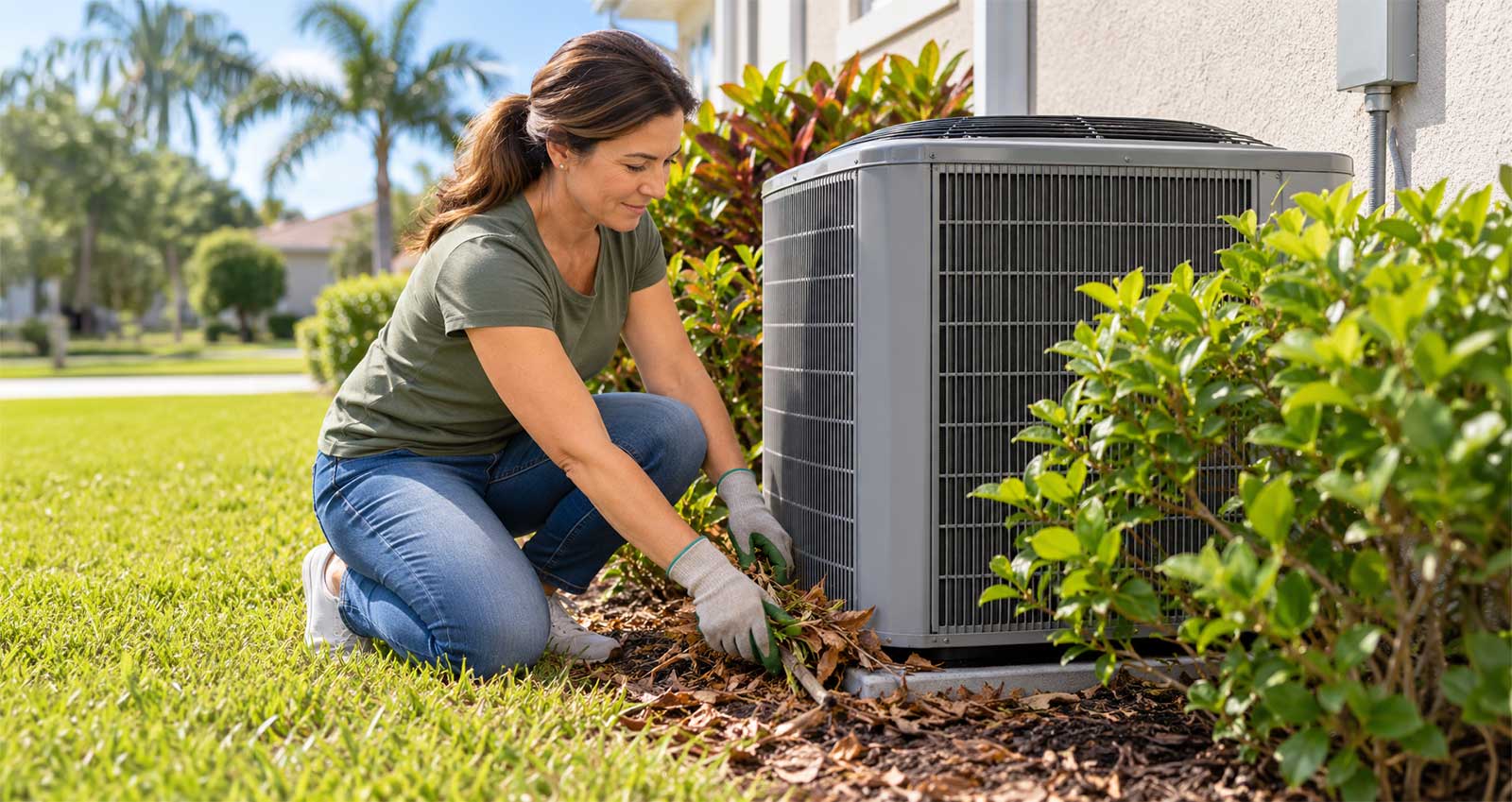
What Did a Tampa Bay Summer Leave Around Your Outdoor Unit?
Your outdoor HVAC equipment spends the entire summer exposed to Florida weather.
Heavy rain, wind, lawn clippings, leaves, vegetation, dirt, and other debris can accumulate around the condenser. Plants can also grow surprisingly quickly during Florida’s wet season.
Homeowners can safely perform a simple visual inspection:
Don’t open equipment panels or attempt electrical or refrigerant repairs yourself. Professional HVAC maintenance goes far beyond clearing visible debris; a trained technician can safely evaluate components and system operation.
Don’t Forget the Condensate Drain After a Humid Summer
Another summer workload homeowners don’t always see is moisture removal.
As your air conditioner removes humidity from indoor air, that moisture has to go somewhere. In Florida’s humid climate, the condensate drainage system gets plenty of use.
Potential warning signs of drainage trouble can include:
A fall maintenance visit lets you inspect the condensate system after months of heavy cooling and moisture removal.

What Should a Professional Check During Fall HVAC Maintenance?
Homeowners can spot symptoms and monitor their equipment, but professional maintenance includes components and measurements that aren’t part of a DIY checklist.
Depending on the equipment and its condition, an HVAC technician may inspect or evaluate areas such as:
The goal isn’t merely to confirm that the system turns on. Professional maintenance can help identify developing problems, support efficient operation, and give you a better understanding of your system’s condition after a demanding cooling season.
Learn more about Gulf Coast Air Systems’ HVAC maintenance and HVAC services.
Fall HVAC Maintenance in Florida Isn’t Just About “Preparing for Winter”
Many fall HVAC checklists are written for homeowners in places where air conditioners are shut down for months and furnaces take over.
Tampa Bay is different.
We can still have warm days well into fall, and you may need cooling throughout much of the year. At the same time, those first chilly mornings eventually arrive, and that’s not when you want to discover a problem with the heating side of your HVAC system.
That gives fall HVAC maintenance two jobs:
Look backward: Check the cooling system after months of heavy summer operation and investigate problems you noticed during peak demand.
Look forward: Make sure the HVAC system is prepared to operate properly when cooler weather finally reaches Tampa Bay.
It’s less of a seasonal shutdown and more of a reset between periods of heavy demand.
My AC Seems Fine. Do I Really Need Fall HVAC Maintenance?
A system can still cool your home while developing issues that aren’t obvious from the thermostat.
You may not see a dirty coil, worn electrical component, drainage issue, or another developing problem from your living room. And once fall temperatures reduce the cooling load, some performance problems can become even harder to notice.
That’s why “the AC is still working” doesn’t necessarily tell you everything about its condition.
Regular air conditioning maintenance lets a professional inspect the equipment and address needs before the next period of demanding weather.
Take the Guesswork Out of HVAC Maintenance
Preventive maintenance is easy to postpone.
When the AC struggles in August, HVAC suddenly jumps to the top of your priority list. When October brings comfortable weather, and the system barely runs, scheduling maintenance may not feel nearly as urgent.
That’s one reason Gulf Coast Air Systems offers the Comfort Club Annual Maintenance Plan.
Instead of waiting until your HVAC system gives you a reason to think about it, scheduled maintenance helps make system care part of your regular home routine.
Give Your HVAC System Its Post-Summer Checkup
Your air conditioner worked hard through another Tampa Bay summer. Before the memories of long cooling cycles, humid afternoons, warm rooms, and unusually high energy use fade with the cooler weather, take note of what your system told you.
Fall HVAC maintenance lets you turn those summer clues into useful information.
Gulf Coast Air Systems has served homeowners throughout the Tampa Bay area for decades. Our experienced, NATE- and factory-trained technicians can inspect your HVAC system, address maintenance needs, and help you prepare for the seasons ahead.
If your system hasn’t had its post-summer checkup, contact Gulf Coast Air Systems to schedule HVAC maintenance.